Choose asphalt when...
Fast, economical surfacing over a substantial vehicle area matters more than decorative detail, and the pavement can be designed around traffic rather than outdoor-living aesthetics.
Resin bound surfacing, block paving, asphalt and concrete can all create a driveway. They do it in completely different ways. This guide compares how each system handles water, movement, maintenance, colour, weeds, repairs, weather and the journey beyond the driveway.
The visible finish is only the top of the pavement. Long-term performance depends on what sits beneath it, how water is managed, how movement is controlled and whether the installation suits the intended traffic.
| Factor | Resin bound | Asphalt / tarmac | Block paving | Concrete |
|---|---|---|---|---|
| Surface character | Seamless decorative aggregate matrix | Continuous compacted bituminous surface | Modular paved surface with joints | Rigid slab, plain or decorative |
| Permeable option | Yes. Resin bound surface itself is porous; full system depends on base design. | Yes, where a purpose-designed porous asphalt system is used. | Yes, with purpose-designed concrete block permeable paving. | Yes, with specialist permeable concrete systems. |
| Weed opportunity | Low. No sand-filled block joints; surface debris still needs cleaning. | Low on intact surface; cracks and edges can collect debris. | Higher maintenance potential at joints where debris and seeds collect. | Low on intact slab; joints and cracks can collect growth. |
| Colour & design | Very broad natural-aggregate palette, borders and blended schemes. | Usually restrained, though specialist coloured asphalt exists. | Broad choice of block shapes, colours and laying patterns. | Plain, exposed aggregate or decorative/pattern-imprinted options. |
| Repairability | Repairable, but patches can be visible if aged material is difficult to match. | Functional repairs are straightforward; patches may remain visible. | Excellent modular repairability. Individual areas can be lifted and reinstated. | Repairable, but cracks and patched decorative slabs can remain visually obvious. |
| Movement strategy | Relies heavily on a stable, correctly prepared base. | Flexible pavement construction accommodates some movement. | Flexible modular pavement relies on bedding, joints and edge restraint. | Rigid pavement uses joints and detailing to control shrinkage and thermal movement. |
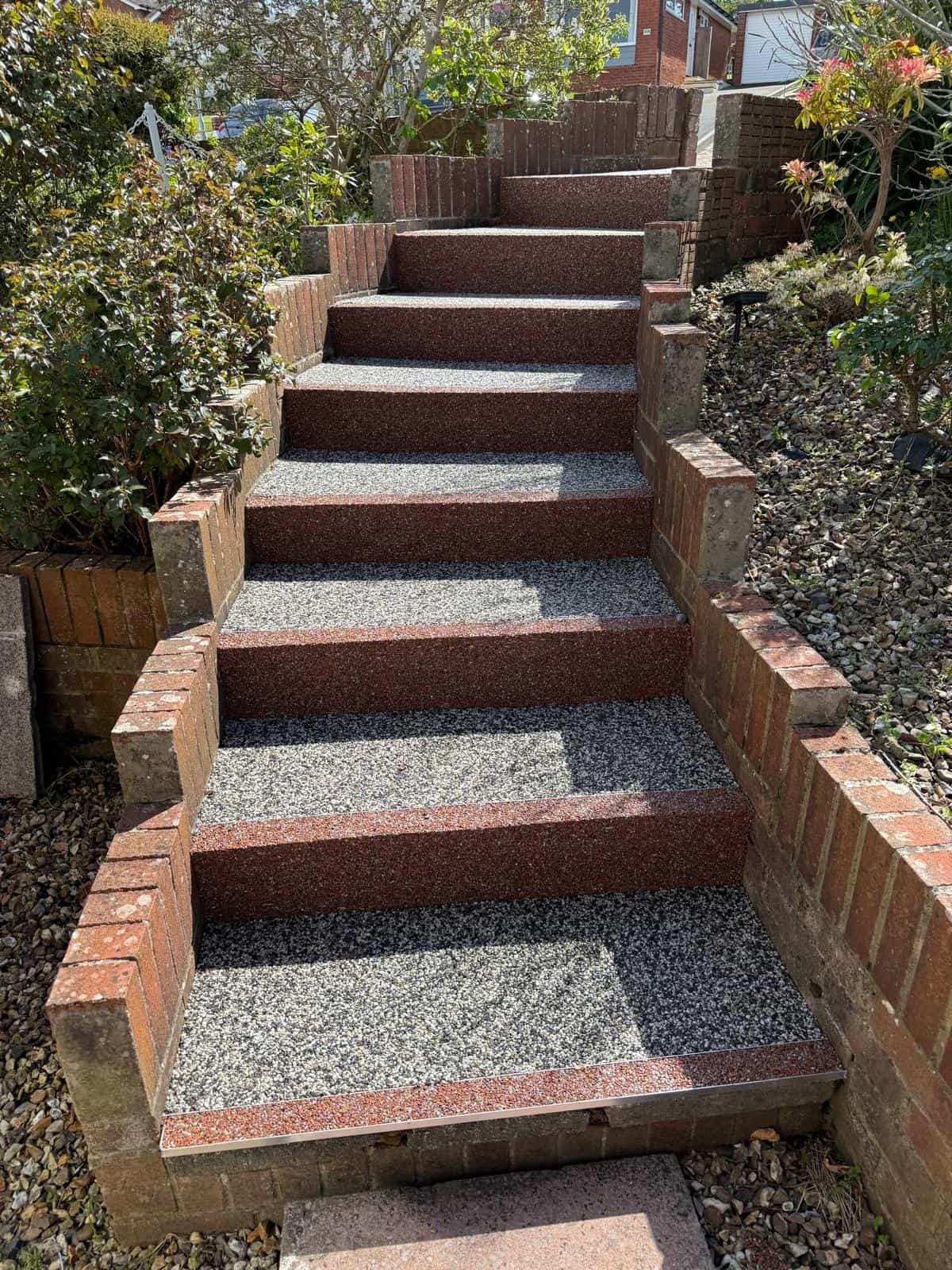
| Whole-property use | Excellent for driveways, paths, patios, steps, terraces and pool surrounds. | Excellent for trafficked areas; less commonly chosen for decorative outdoor living. | Highly versatile but involves many units, cuts and joints across complex layouts. | Versatile, especially in larger slabs, paths and patios; transitions need careful detailing. |
Not to be confused with resin bonded “scattercoat” surfacing.
In a resin bound system, clean graded aggregate is mixed thoroughly with a two-part polyurethane resin before being spread and hand-trowelled. Each stone is coated, while interconnected voids remain between the stones. That open matrix is what gives resin bound surfacing its characteristic permeability.
The language tells you a lot about whether an installer understands the material.
“A resin surface is only as good as the base beneath it.”
Surface quality, substrate stability, moisture conditions and mixing discipline all matter. Resin is forgiving aesthetically. It is much less forgiving chemically.
“Tarmac” is the everyday term. Most modern surfacing uses bitumen rather than traditional road tar.
Modern asphalt combines graded aggregate, filler and a bituminous binder. Domestic and highway constructions can include a base, binder course and surface course, each performing a different structural role.
The joints are not merely decorative. They form part of the pavement behaviour.
Block paving is a modular flexible pavement. Individual concrete or clay units sit on a prepared laying course and work together through joint friction, interlock, consolidation and effective edge restraint.
Plain concrete, exposed aggregate and pattern-imprinted concrete behave differently visually, but all depend on correct slab design.
Concrete paving is a rigid pavement. It can be exceptionally durable, but drying shrinkage, thermal expansion, freeze-thaw exposure and ground movement must be anticipated rather than ignored.
The right pavement depends on what you are trying to achieve. A commercial access road, a traditional courtyard, a large family driveway and a full-property outdoor makeover do not necessarily want the same material.
Fast, economical surfacing over a substantial vehicle area matters more than decorative detail, and the pavement can be designed around traffic rather than outdoor-living aesthetics.
You value modular repairability, traditional paving character, pattern choice and the ability to lift and reinstate individual areas later.
You want a rigid slab solution, are comfortable with visible movement joints and have a design that benefits from plain, exposed or imprinted concrete.
You want a decorative aggregate finish, permeable surface potential, reduced joint maintenance and one material capable of travelling through driveways, paths, steps, patios and other outdoor spaces.
A modern exterior is often not one isolated rectangle of parking. It is a journey around the home. Resin bound surfacing becomes particularly interesting when several spaces need to feel connected rather than independently resurfaced.
Surfacing marketing gets noisy quickly. These distinctions matter when comparing products properly.
A resin bound wearing course allows water through, but the construction beneath it still has to receive and manage that water. The same principle applies to purpose-designed porous asphalt and permeable block paving.
Resin removes conventional block-paving joints, but windblown seeds can germinate in organic debris left on almost any external surface.
Texture, aggregate grading, finishing and contamination all affect underfoot performance. No outdoor surface should be marketed as magically immune to slippery conditions.
Outdoor decorative work should use a resin system designed for ultraviolet exposure. UV-resistant aliphatic binders are used where colour stability matters.
The short answers to the questions homeowners tend to ask once the samples arrive on the kitchen table.
Not automatically. Resin offers a seamless decorative finish with no conventional sand-filled block joints, while block paving offers excellent modular repairability. The better choice depends on the property, maintenance expectations, drainage design and the look you want.
It removes the joint network associated with conventional block paving, so there are far fewer obvious places for weeds to establish. Seeds can still germinate in leaves, dirt or organic debris left on top of the surface, so routine sweeping and cleaning still matter.
No. A correctly designed and installed asphalt driveway can provide long service. Its disadvantages are more about decorative flexibility, surface ageing, repair appearance and the fact that standard asphalt is normally impermeable unless a porous system is specifically designed.
Concrete naturally shrinks and moves with temperature and moisture changes. Good concrete paving is designed with joints and suitable construction details to control that movement. Poor preparation, unsuitable mixes or ground movement can increase random cracking.
Lifespan depends on the resin system, base, traffic, workmanship, UV exposure and maintenance. High-quality systems on stable substrates can provide long service, with some systems designed around service lives extending toward 20 to 25 years.
Yes. Depending on levels, substrates and detailing, resin bound surfacing can be used across paths, patios, steps, terraces, courtyards and pool surrounds, allowing several outdoor areas to share one coordinated material palette.
Resin isn't one of the things we do. It's what we do. For homeowners looking for a modern, permeable, UV-resistant surface that can travel beyond the driveway and through the rest of the property, resin bound surfacing gives us a remarkably flexible design language.