0800 654 6756·Email The Devon Resin Co
THE DEVON RESIN CO
Resin patios · Plymouth

Resin Patio Installers Plymouth

Outdoor spaces designed around the way you actually live. From family patios and accessible garden routes to coastal terraces, pool surrounds, holiday accommodation and completely bespoke decorative designs.

Browse the Resin Gallery →
A patio built around you

More than a rectangle behind the house

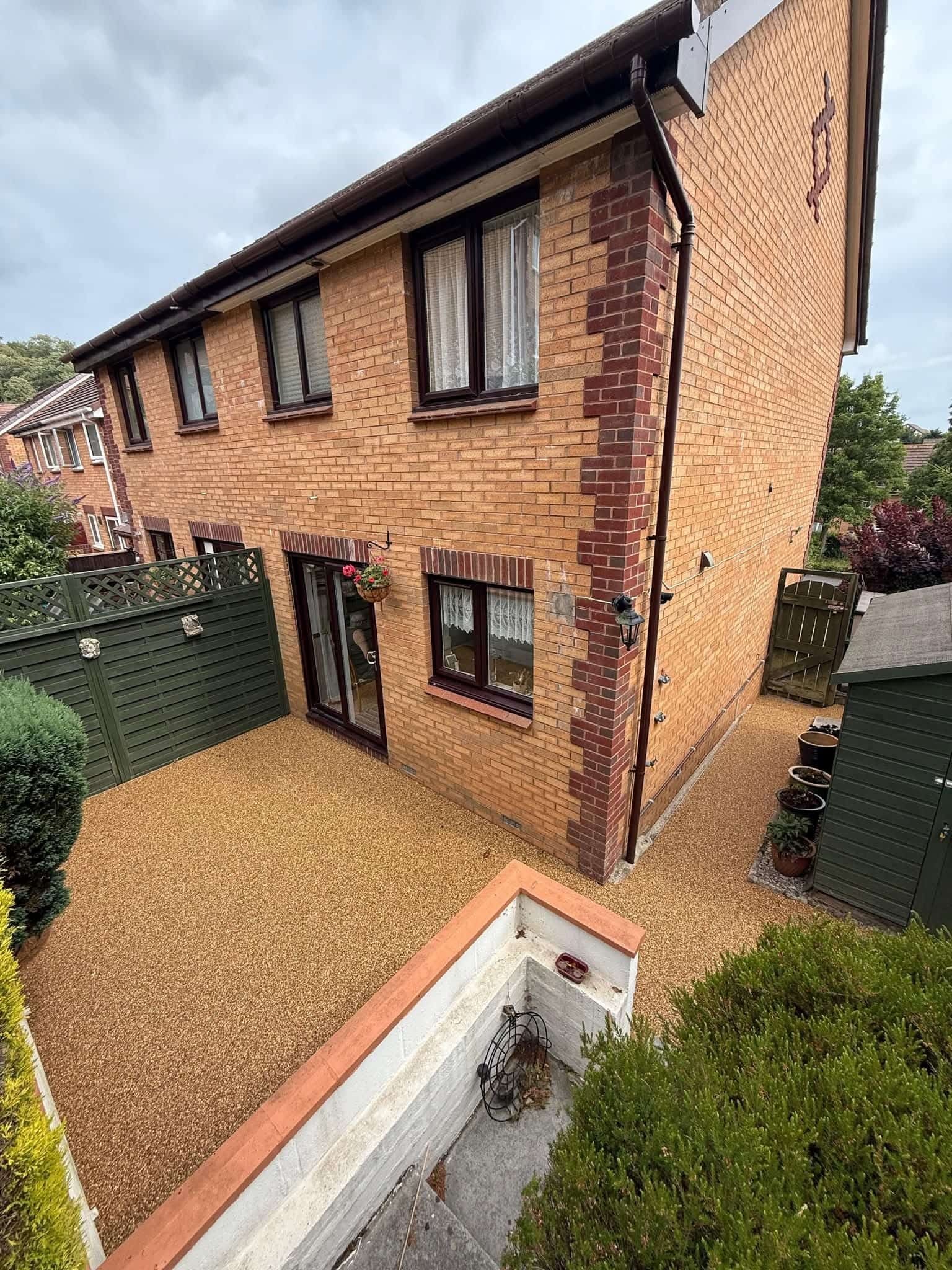
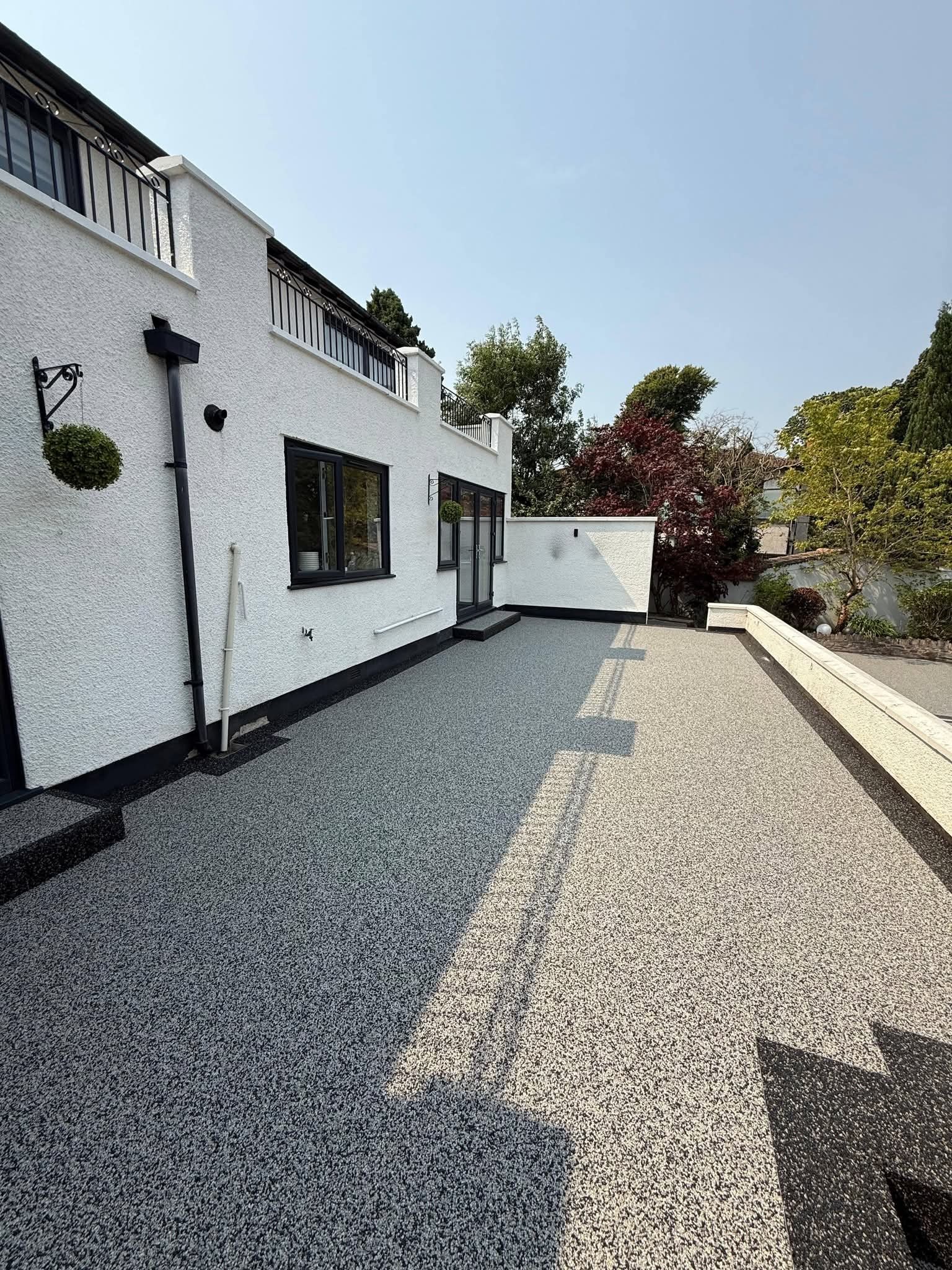
A good patio should make the garden easier to use, easier to move through and more enjoyable to spend time in. Resin bound surfacing can create one continuous outdoor floor connecting doors, seating areas, paths, steps, side access and garden features.

For Plymouth homes that can mean a practical family garden, a clean route from a conservatory or bifold doors, a terrace on a sloping plot, a hard-working holiday let, or a deliberately designed outdoor space with contrasting borders and individual details.

Engineering underneath. Creativity on top.
Resin patio used as an outdoor family seating area with a dog
A resin patio being used exactly as intended: as part of everyday garden life.
Designed for real people

Why Plymouth homeowners choose resin patios

Busy family gardens

Children, pets, garden furniture, muddy shoes and outdoor meals are part of normal life. A resin-bound patio can be swept and washed down as part of routine maintenance, without loose gravel migrating across the garden.

Older residents and accessible routes

A firm continuous surface can help create smoother routes for walking aids, wheelchairs and pushchairs when gradients, thresholds, drainage channels and level changes are properly designed.

Wet Devon gardens

Where the complete construction is designed to be permeable, water can move through the resin surface and the underlying open structure rather than being trapped on top as standing runoff.

Coastal and exposed properties

Plymouth's coastal setting means drainage, UV stability, wind-blown debris, shade and routine cleaning all matter. The system should be specified around the actual site rather than treated as a one-size-fits-all surface.

Holiday lets and guest accommodation

Outdoor areas that photograph well, cope with repeated use and can be cleaned efficiently are valuable to landlords, holiday-let owners and guest accommodation providers.

Hotels, cafés and commercial spaces

Terraces, courtyards, entrances and outdoor seating areas can be specified for heavier pedestrian use, branding, accessibility and appearance, with loading and slip resistance considered separately from a normal domestic patio.

Real resin design

Your patio is a blank canvas

Resin does not have to mean one colour spread across a square. Contrasting aggregates, borders, curves and carefully separated areas can turn the surface itself into part of the garden design.

Personal motifs

Equestrian themes, nautical details, property names, initials and other individual designs can be explored where the required geometry and colour separation are practical.

Architectural borders

Contrasting perimeter bands and geometric details can frame the patio, pick up colours from brick, render or stone, and separate different outdoor zones.

Commercial identity

Business colours, entrance features and branded design ideas can be considered for hospitality and commercial spaces where a more distinctive arrival is wanted.

What actually goes underneath

A resin patio is a system, not just a decorative topping

The visible aggregate is only the surface course. The condition and design of the construction underneath it matter just as much to long-term performance.

Subgrade and sub-base: the natural ground and load-spreading foundation must be suitable for the site, expected use and drainage strategy.
Immediate substrate: the resin may be installed over a purpose-designed permeable base or, on suitable projects, over an existing sound hard surface prepared for overlay.
Resin-bound surface course: washed, graded, kiln-dried aggregate is mixed with the selected resin before being laid and trowelled.
Edge restraint: block, stone, metal or another suitable restraint contains the resin at lawns, planting, paths, walls and thresholds.
Drainage: a permeable resin surface only forms part of a fully permeable system when the underlying construction is also designed to accept and manage water.
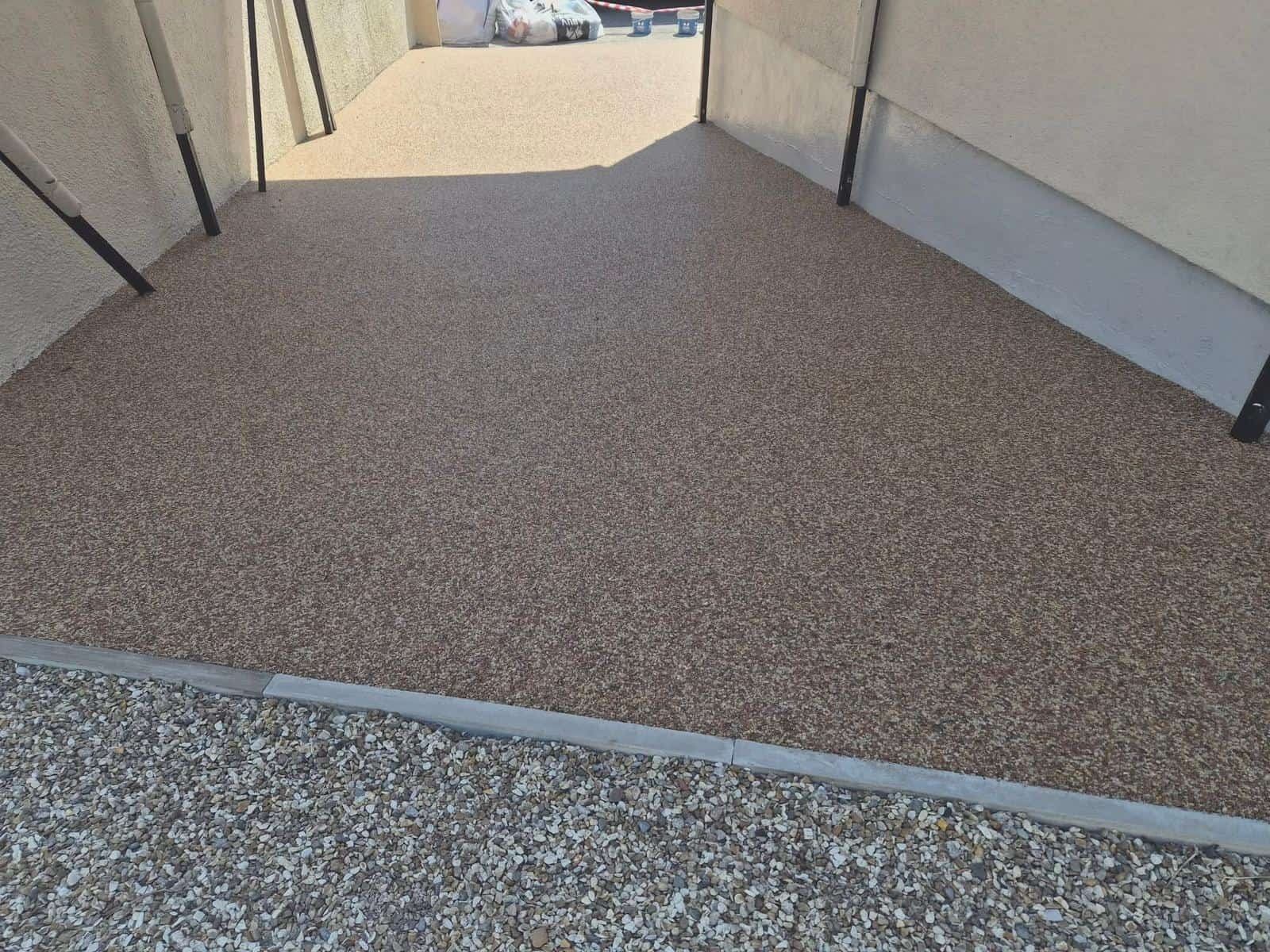
Resin surfacing continuing around a narrow side area and meeting adjoining surfaces
Resin can work through awkward geometry, side access and transitions where the underlying construction is properly prepared.
UNDERSTANDING THE BUILD-UP

What is actually beneath a resin patio?

The decorative resin-bound finish is the surface course, sometimes called the wearing course. It is only one part of the construction. The layers beneath it have to suit the existing ground, intended use and drainage design.

Surface / wearing courseThe visible resin-bound aggregate that forms the finished patio surface.
Substrate or base courseThe stable layer immediately beneath the resin. Depending on the chosen system this may be a suitable porous asphalt, concrete or another approved construction.
Sub-baseThe load-spreading foundation below the surface construction. In permeable designs an open-graded material such as appropriately specified Type 3 may form part of the build-up.
SubgradeThe natural ground beneath the constructed patio. Its condition influences excavation, preparation and drainage decisions.

Important: a permeable resin-bound top does not automatically make the whole patio permeable. For water to pass through the construction, the base, sub-base and drainage strategy must also be designed to receive and manage it.

Plymouth property considerations

One city, very different gardens

Plymouth includes compact urban gardens, coastal and exposed plots, post-war estates, bungalows, modern developments and properties where conservatories, extensions or bifold doors have changed how the rear garden is used.

Sloping and stepped plots

Where a garden changes level, the patio needs to be considered with steps, retaining edges, drainage routes and safe transitions rather than treated as an isolated flat patch.

Extensions and garden rooms

New openings and glazed extensions often create a stronger relationship between the house and garden. Resin can help form a continuous-looking route from doors into the wider outdoor area, subject to threshold and drainage detailing.

Coastal weather

Wind-blown debris, rainfall, shaded corners and seasonal exposure make routine maintenance and correct drainage especially relevant across parts of Plymouth and its waterfront-facing neighbourhoods.

Compare the finish

Resin, porcelain, stone, gravel or decking?

There is no honest reason to pretend resin is the right answer for every garden. The useful question is what kind of surface best suits the property, the way the space will be used and the look you want.

SurfaceWhere it can shineThings to think about
Resin boundContinuous finish, curves, colour choice, no loose stone, permeable build-up options.Needs correct mixing, substrate, edge restraint and system-specific installation.
PorcelainCrisp contemporary architecture and defined slab layouts.Regular joints, cuts and rigid geometry may suit some designs better than others.
Natural stoneTraditional character, individual slabs and heritage-style gardens.Can be the aesthetically stronger choice for some older or highly traditional properties.
Loose gravelTraditional appearance and relatively simple coverage.Moves underfoot, can migrate and is less comfortable for wheels and walking aids.
DeckingRaised spaces and a timber or composite architectural feel.Different structural and maintenance requirements from a mineral aggregate surface.
Care and maintenance

Low maintenance, not maintenance-free

A resin patio still lives outdoors. Leaves, potting soil, food, algae, furniture marks and airborne seeds do not disappear because the surface is resin bound.

Regular sweeping helps prevent debris settling into the surface. Occasional washing or suitable pressure cleaning can remove normal garden dirt, while shaded areas may need additional treatment if biological growth develops. Cleaning also helps maintain the open surface structure where permeability is part of the design.

We avoid calling resin “weed proof”. A well-installed resin-bound surface is resistant to weeds growing up through the construction, but seeds can still establish in dirt that accumulates on any outdoor surface.

Dog running across a resin patio beside outdoor furniture
Designed for gardens that are actually lived in, not just photographed once and never touched again.
FROM STONE TO FINISHED SURFACE

What happens when resin bound is mixed and laid?

The finished patio may look simple, but every batch is a timed mix of graded stone and polyurethane resin. Consistency matters because variations in moisture, proportion, mixing or working time can show in the finished surface.

Graded, kiln-dried aggregate

Professional resin-bound systems use washed, graded and kiln-dried decorative aggregate. A common resin-bound grading combines larger stone, such as 2–5mm aggregate, with a smaller 1–3mm fraction. The exact blend and resin-to-aggregate ratio must follow the selected manufacturer's system rather than a one-size-fits-all recipe.

The smaller grading helps fill the spaces between larger particles and contributes to a consistent three-dimensional aggregate matrix. The stone must also be dry. Moisture can react with polyurethane resin and contribute to micro-foaming, clouding or blooming during cure.

Working against the clock

Once the resin components are combined, the mix has a limited pot life or usable working time. Each batch, often called a pull by installers, has to be mixed consistently, moved to the laying area, spread and hand-trowelled within the manufacturer's working window.

Installers aim to maintain a wet edge, the still-workable edge of the previous pull, so the next batch can knit into it. If sequencing is poor or an edge cures too far, a visible cold joint or day joint can be left across the patio.

Why forced-action mixing matters. A forced-action mixer is designed to coat the graded aggregate consistently with resin. It is not the same process as turning stone in an ordinary cement mixer. Accurate batching, full particle coating and consistent mixing help avoid dry patches, resin-rich areas and variations in the finished matrix.
USEFUL TERMS, PLAIN ENGLISH

Six resin patio terms worth knowing

You do not need to become a resin installer to choose a patio, but understanding a few terms makes it much easier to ask good questions about the specification.

Pot life

The usable time available after the resin components have been mixed. Temperature and the selected system affect the working window.

Wet edge

The uncured edge kept workable so the next batch can join cleanly without an unnecessary visible joint.

PTV

Pendulum Test Value is a recognised way of assessing slip resistance. Around pools, steps or frequently wet areas, the required slip performance should be considered as part of the specification rather than calling any surface simply “non-slip”.

Reflective cracking

Movement or cracking in the substrate can travel through to the resin above. Existing cracks and concrete movement joints therefore need assessment rather than being hidden and forgotten.

Open-graded

A construction material deliberately containing connected voids so water can move through it. It is important when a genuinely permeable patio build-up is required.

Infiltration performance

The ability of a permeable construction to continue accepting water. Sweeping away leaves, soil and debris helps prevent the surface voids becoming clogged over time.

UV-stable does not just mean “a nicer resin”

Aliphatic polyurethane binders are used where UV stability and colour retention are important. Aromatic or non-UV resin can change colour through exposure to sunlight, which can be especially noticeable with pale decorative aggregates. A patio is somewhere people sit beside and look at every day, so binder choice can matter as much aesthetically as the stone blend itself.

Steps, slopes and wet areas need their own detailing

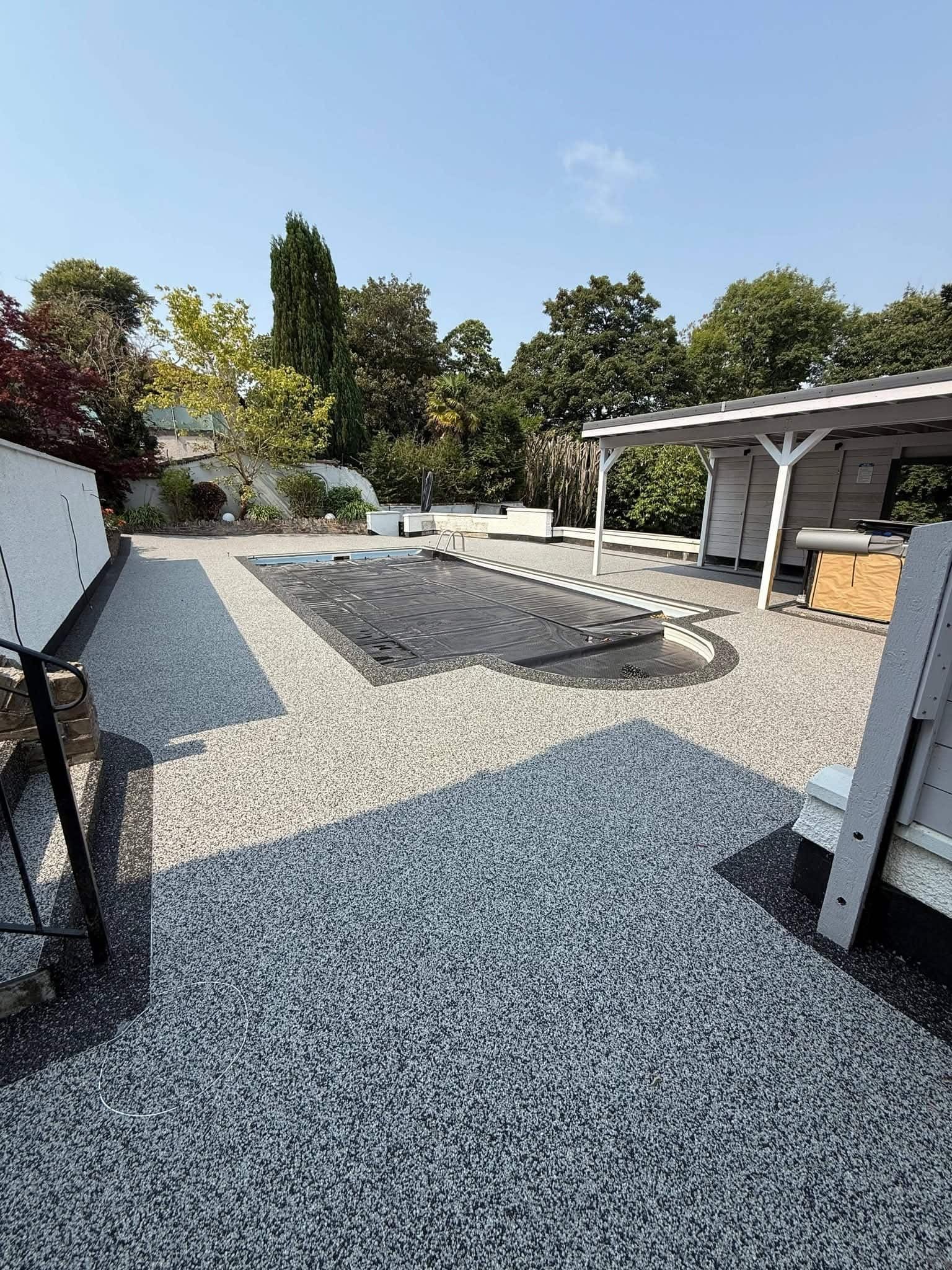
A resin patio should not simply be described as “non-slip”. Slip resistance depends on the chosen system, aggregate and finish, and can be considered using measures such as PTV together with appropriate anti-slip aggregate where specified. On stepped gardens, the treads, risers and nosings, gradients, thresholds and drainage routes all need to work together. Standard horizontal resin should not simply be assumed suitable for every vertical riser detail.

Frequently asked questions

Resin patio questions in Plymouth

Can I choose between Polybound and Vuba?

Yes. The Devon Resin Co works with both systems. If you already have a preference, tell us. If not, we can explain the differences in construction and help you decide what you want for your project.

Can a resin patio be fully permeable?

Yes, where the complete construction is designed for permeability. A permeable resin surface laid over an impermeable base does not make the whole build-up fully permeable, so the base, sub-base and drainage strategy need to work together.

Can resin be installed over an existing concrete patio?

Sometimes. Existing concrete or another hard surface needs to be structurally sound, appropriately prepared and compatible with the drainage design. Cracks, movement joints, levels and thresholds all need assessment first.

Is resin suitable for older people or wheelchair users?

It can be a very practical option because the surface is firm, smooth and continuous. Accessibility still depends on gradients, step design, thresholds, drainage channels and transitions as well as the surfacing material itself.

Is resin non-slip around a pool?

We describe properly specified resin-bound surfacing as slip-resistant rather than non-slip. Pool surrounds and other wet areas should be designed with appropriate drainage and slip-resistance measures for the expected use.

Can you create patterns or artwork in a resin patio?

Yes, depending on the design. Contrasting aggregate blends, borders and shaped sections can be used to create decorative effects. More ambitious motifs, logos or bespoke artwork should be discussed at design stage so the geometry and colour separations can be planned properly.

Talk through your Plymouth patio

Start with the space you want to create

Tell us how you use the garden, what you like visually and whether you already have a preferred resin system. We can then talk through the surface, construction, drainage and design options.