Property character
cob and granite buildings, established town gardens and countryside-edge homes. Aggregate, borders and geometry should respond to the building rather than imitate a generic catalogue layout.
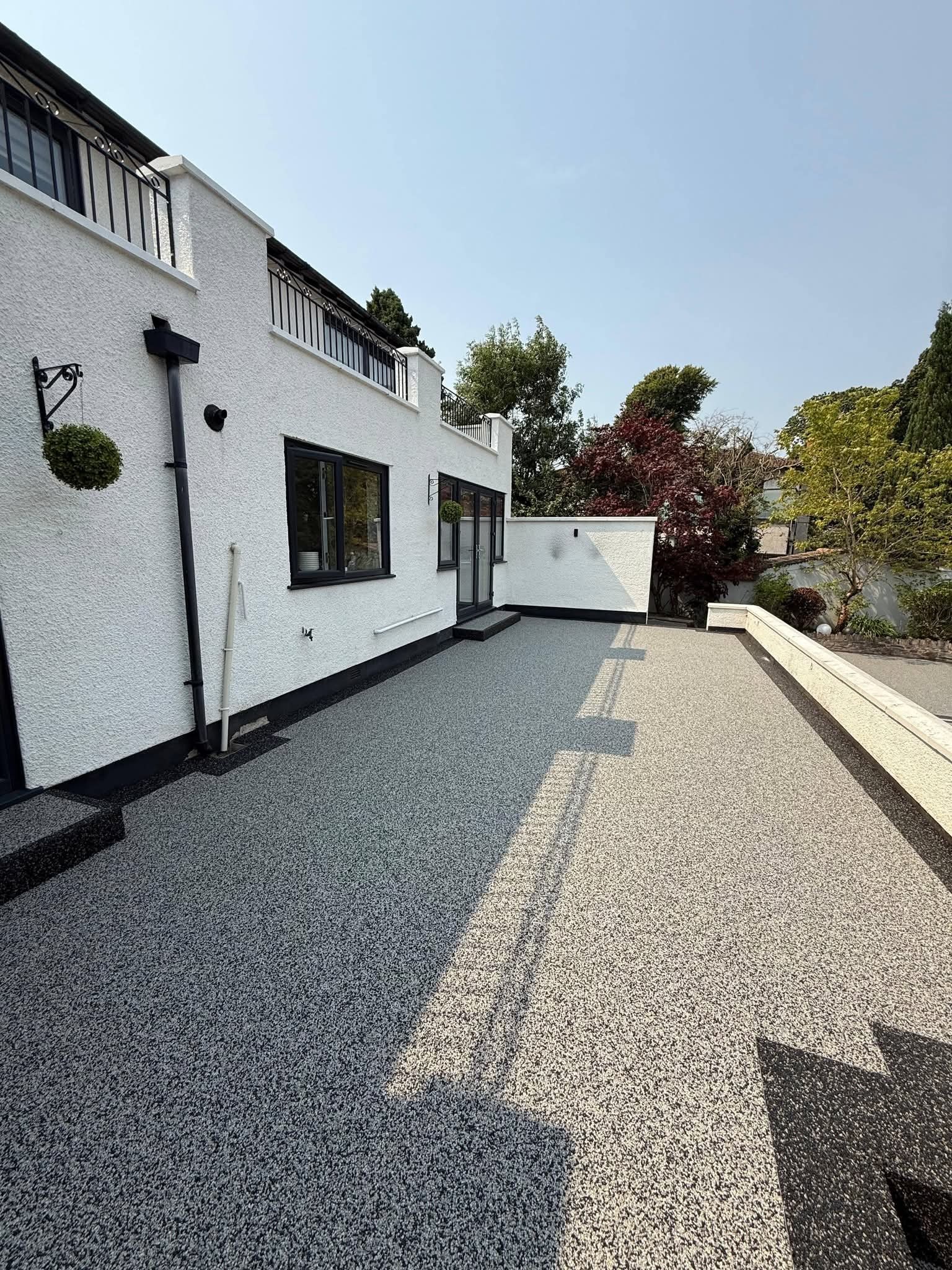
Outdoor living designed for Dartmoor-gateway market-town settings: from dining terraces and family seating to paths, steps and practical connections through the garden.
Browse the Resin Gallery →Bovey Tracey sits in a landscape shaped by the River Bovey, Parke and the eastern edge of Dartmoor. That context affects how gardens are arranged, reached and used—but it never replaces an assessment of the individual property.
Bovey Tracey is known for cob, granite and its craft identity. Resin can be detailed with the same attention to colour and junctions, but should never be presented as automatically superior to natural stone in a traditional garden.

cob and granite buildings, established town gardens and countryside-edge homes. Aggregate, borders and geometry should respond to the building rather than imitate a generic catalogue layout.
slopes, mature planting, shade and visual compatibility with traditional materials. Treads, nosings, transitions and mixer access need planning before installation begins.
Dining, seating, play, pets, planting and garden storage create different wear and cleaning patterns. The finished layout should make those routines simpler.
Resin bound is the visible surface course. Performance begins lower down—with subgrade, sub-base, base or substrate, movement detailing, edge restraint and water management.
Permeability: a resin-bound surface can form part of a fully permeable construction only where the base, sub-base and drainage strategy are also designed to accept and manage water.
Sound concrete or asphalt may sometimes be suitable, but resin must not be sold as a cosmetic cure for structural failure.
Cracks, movement or expansion joints, contamination, weak edges, trapped water, door thresholds and inadequate falls all need checking. If the base moves, cracking can reflect into the new surface above. Loose slabs generally need more than a coat over the top.
| Surface | Useful strengths | Honest considerations |
|---|---|---|
| Resin bound | Continuous in-situ finish around curves, planters and narrow routes; no loose stone. | Requires accurate mixing, sound construction, edge restraint and system-led installation. |
| Porcelain | Crisp geometry and controlled contemporary appearance. | Joints and rigid modular layouts create a different visual language. |
| Natural stone | Often compelling beside traditional architecture and mature gardens. | Variable texture and joints may be part of its appeal, but require thoughtful laying. |
| Gravel or decking | Can suit informal landscapes or raised structural spaces. | Loose gravel migrates; decking has separate structural and maintenance demands. |
Sweep leaves, soil and food debris; clean beneath furniture; wash normal dirt; and manage moss or algae where shade and moisture encourage growth.
Seeds can establish in dirt sitting on any outdoor surface, so “weed-proof” is not an honest promise. Cleaning also helps preserve open surface voids where infiltration performance is part of the design.

Often restrained greys, buffs or mixed natural tones are worth viewing on site. Samples should be judged beside the actual walling, render and light rather than selected from a screen alone.
Yes. The Devon Resin Co works with both systems and can explain how intended use, substrate, permeability, loading, appearance and manufacturer specification affect the choice.
Yes, where the complete build-up is designed to manage water. A porous resin-bound surface over an impermeable or unsuitable base is not automatically a fully permeable construction.
No. It is low maintenance. Leaves, soil, food and biological growth still need sweeping and cleaning, particularly where keeping surface voids open supports infiltration.
Sometimes. The concrete must be sound, stable and properly prepared. Cracks, movement joints, contamination, drainage, levels and thresholds must be assessed because defects can reflect through the new surface.
Tell us how the garden is used, what lies beneath the present patio, how access works and what appearance you prefer. We can then discuss system, drainage, colour and detailing.